Chesterton Knew The Importance of Ecumenical Dialogue

Chesterton Knew The Importance of Ecumenical Dialogue

Wednesday, 15 July 2015

An absurd assumption


There is in modern discussions of religion and philosophy an absurd assumption that a man is in
some way just and well-poised because he has come to no conclusion; and that a man is in some way knocked off the list of fair judges because he has come to a conclusion. It is assumed that the sceptic has no bias; whereas he has a very obvious bias in favour of scepticism. I remember once arguing with an honest young atheist, who was very much shocked at my disputing some of the assumptions which were absolute sanctities to him (such as the quite unproved proposition of the independence of matter and the quite improbable proposition of its power to originate mind), and he at length fell back upon this question, which he delivered with an honourable heat of defiance and indignation: “Well, can you tell me any man of intellect, great in science or philosophy, who accepted the miraculous?” I said, “With pleasure. Descartes, Dr. Johnson, Newton, Faraday, Newman, Gladstone, Pasteur, Browning, Brunetiere—as many more as you please.” To which that quite admirable and idealistic young man made this astonishing reply—”Oh, but of course they had to say that; they were Christians.” First he challenged me to find a black swan, and then he ruled out all my swans because they were black. The fact that all these great intellects had come to the Christian view was somehow or other a proof either that they were not great intellects or that they had not really come to that view. The argument thus stood in a charmingly convenient form: “All men that count have come to my conclusion; for if they come to your conclusion they do not count.”
It did not seem to occur to such controversialists that if Cardinal Newman was really a man of intellect, the fact that he adhered to dogmatic religion proved exactly as much as the fact that Professor Huxley, another man of intellect, found that he could not adhere to dogmatic religion; that is to say (as I cheerfully admit), it proved precious little either way. If there is one class of men whom history has proved especially and supremely capable of going quite wrong in all directions, it is the class of highly intellectual men. I would always prefer to go by the bulk of humanity; that is why I am a democrat. But whatever be the truth about exceptional intelligence and the masses, it is manifestly most unreasonable that intelligent men should be divided upon the absurd modern principle of regarding every clever man who cannot make up his mind as an impartial judge, and regarding every clever man who can make up his mind as a servile fanatic. As it is, we seem to regard it as a positive objection to a reasoner that he has taken one side or the other. We regard it (in other words) as a positive objection to a reasoner that he has contrived to reach the object of his reasoning. We call a man a bigot or a slave of dogma because he is a thinker who has thought thoroughly and to a definite end. We say that the juryman is not a juryman because he has brought in a verdict. We say that the judge is not a judge because he gives judgment.
-- All Things Considered (1908) GK Chesterton 

Thursday, 18 June 2015

I'm Five Foot Ten & Thus Still Fighting The Battle Of Waterloo


In short you could just read the bits in bold.
"IT must continually be insisted upon in military history, that general actions, however decisive, are but the functions of campaigns; and that campaigns, in their turn, are but the functions of the political energies of the governments whose armies are engaged.

The object of a campaign is invariably a political object, and all its military effort is, or should be, subsidiary to that political object.

One human community desires to impose upon the future a political condition which another human community rejects; or each is attempting to impose upon the future, conditions irreconcilable one with the other.

Until we know what those conditions are, or what is the political objective of each opponent, we cannot decide upon the success of a campaign, nor give it its true position in history.

Thus, to take the simplest and crudest case, a nation or its government determines to annex the territory of a neighbour; that is, to subject a neighbouring community to the laws of the conqueror. That neighbouring community and its government, if they are so old-fashioned as to prefer freedom, will resist by force of arms, and there will follow what is called a "campaign" (a term derived from the French, and signifying a countryside : for countrysides are the theatres of wars). In this campaign the political object of the attempted conquest on the one hand, and of resistance to it on the other, are the issue. The military aspect of the campaign is subsidiary to its political objects, and we judge of its success or failure not in military but in political terms.

The prime military object of a general is to "annihilate" the armed force of his opponents. He may do this by breaking up their organisation and dispersing them, or by compelling the surrender of their arms. He may achieve success in this purely military object in any degree. But if, as an end and consequence of his military success, the political object be not achieved if, for instance, in the particular case we are considering, the neighbouring community does not in the future obey laws dictated to it by the conqueror, but remains autonomous then the campaign has failed.

Such considerations are, I repeat, the very foundation of military history; and throughout this Series they will be insisted upon as the light in which alone military history can be understood.

It is further true that not only may a campaign be successful in the military sense, and yet in the largest historical sense be a failure, but, quite evidently, the actions in a campaign may each be successful and yet the campaign a failure ; or each action may, on the whole, fail, and yet that campaign be a success. As the old formula goes, "You can win every battle and lose your campaign." And, again, "A great general does not aim at winning battles, but at winning his campaign." An action results from the contact of the opposing forces, and from the necessity in which they find themselves, after such contact, of attempting the one to disorganise or to capture the other. And in the greater part actions are only "accepted," as the phrase goes, by either party, because each party regards the action as presenting opportunities for his own success.

A campaign can perfectly well be conceived in which an opponent, consciously inferior in the field, will avoid action throughout, and by such a plan can actually win the campaign in the end. Historical instances of this, though rare, exist. And there have even been campaigns where, after a great action disastrous to one side, that side has yet been able to keep up a broken resistance sufficiently lengthy and exhausting to baulk the conqueror of his political object in the end.

In a word, it is the business of the serious student in military history to reverse the popular and dramatic conception of war, to neglect the brilliance and local interest of a battle for the larger view of the whole operations; and, again, to remember that these operations are not an end in themselves, but are only designed to serve the political plan of the government which has commanded them. Judged in this true light, we may establish the following conclusions with regard to the battle of Waterloo.

First, the battle of Waterloo was a decisive action, the result of which was a complete military success for the Allies in the campaign they had undertaken, and a complete military defeat for Napoleon, who had opposed them.

This complete military success of the Allies' campaign was, again, equivalent to a success in their immediate political object, which was the overthrow of Napoleon's personal power, the re-establishment of the Bourbons upon the French throne, and the restoration of those traditions and ideals of government which had been common to Europe before the outbreak of the French Revolution twenty-four years before.

Had the effect of this battle and that campaign been permanent, one could speak of their success as complete; but when we discuss that largest issue of all, to wit, whether the short campaign which Waterloo so decisively concluded really effected its object, considering that that object was the permanent destruction of the revolutionary effort and the permanent re- establishment of the old state of affairs in Europe, we are compelled to arrive at a very different conclusion: a conclusion which will vary with the varying judgment of men, and one which cannot be final, because the drama is not yet played out; but a conclusion which, in the eyes of all, singularly modifies the effect of the campaign of Waterloo.

It is obvious, at the first glance we take of European history during, say, the lifetime of a man who should have been a boy in Waterloo year, that the general political object of the revolutionary and Napoleonic armies was not reversed at Waterloo. It was ultimately established. The war had been successfully maintained during too long a period for the uprooting of the political conditions which the French had attempted to impose upon Europe. Again, those conditions were sufficiently sympathetic to the European mind at the time to develop generously, and to grow in spite of all attempted restriction. And we discover, as a fact, democratic institutions, democratic machinery at least, spreading rapidly again after their defeat at Waterloo, and partially victorious, first in France and later elsewhere, within a very few years of that action.

The same is true of certain secondary results of the prolonged revolutionary and Napoleonic campaigns. Nationality pre- dominated over the old idea of a monarch governing his various "peoples," and the whole history of the nineteenth century was a gradual vindication of the principle of nationality. A similar fate awaited institutions bound up with the French revolutionary effort: a wide and continually expressed suffrage, the arming of whole nations in defence of their independence, the ordering of political life upon the new plan, down even to the details of the revolutionary weights and measures (the metre, the gramme, etc.) these succeeded and in effect triumphed over the arrangements which that older society had fought to restore.
[And so 200 hundred years on I'm still fighting the Battle of Waterloo by drinking PINTS of non-alcoholic snakebite and by still being five FOOT ten INCHES tall. Walking 27 Miles each year on the GK Chesterton Pilgrimage helps as well, http://www.catholicgkchestertonsociety.co.uk/]

On the other hand, the advance of all this was much slower, much more disturbed, much less complete, than it would have been had Napoleon not failed in Russia, suffered his decisive defeat at Leipzig, and fallen for ever upon that famous field of Waterloo; and one particular characteristic, namely, the imposition of all these things upon Europe by the will of a government at Paris, wholly disappeared.

We may sum up, then, and say that the political effect of the battle of Waterloo and its campaign was an immediate success for the Allies: that their ultimate success the history of the nineteenth century has reversed; but that the victory of Waterloo modified, retarded, and perhaps distorted in a permanent fashion the establishment of those conceptions of society and government which the Revolution, and Napoleon as its soldier, had set out to establish.

There is a side question attached to all this, with which I shall conclude, because it forms the best introduction to what is to follow: that question is, "Would Napoleon have ultimately succeeded even if he had triumphed instead of fallen upon the 18th of June 1815?" In other words, was Waterloo one of these battles the winning or losing of which by either side, meant a corresponding decisive result to that side? Had Wellington's command broken at Waterloo before the arrival of Blucher, would Napoleon's consequent victory have meant as much to him as his defeat actually meant to the allies? The answer of history to this question is, No. Even had Napoleon won on that day he would have lost in the long run.

The date to which we must affix the reverse of Napoleon's effort is not the 18th of June 1815, but the 19th of October 1812, when the Grand Army began its retreat from Moscow; and the political decision, his failure in which was the origin of his fall, was not the decision taken in June 1815 to advance against the Allies in Belgium, but the decision taken in May 1812 to advance into the vast spaces of Russia. The decisive action which the largest view of history will record in centuries to come as the defeat which ruined Napoleon took place, not south of Brussels, but near the town of Leipzig, two years before. From the last moment of that three days' battle (again the 19th of October, precisely a twelvemonth after the retreat from Moscow had begun), Napoleon and the French armies are continually falling back. Upon the 4th of April in the following year Napoleon abdicated; and exactly a month later, on the 4th of May, he was imprisoned, under the show of local sovereignty, in the island of Elba.
It was upon the 1st of March 1815 that, having escaped from that island, he landed upon the southern coast of France. There followed the doomed attempt to save somewhat of the Revolution and the Napoleonic scheme, which is known to history as the "hundred days." Even that attempt would have been impossible had not the greater part of the commanders of units in the French army, that is, of the colonels of regiments, abandoned the Bourbon government, which had been restored at Paris, and decided to support Napoleon.

But even so, the experiment was hazardous in the extreme. Had the surrounding governments which had witnessed and triumphed over his fall permitted him, as he desired, to govern France in peace, and France alone, this small part of the revolutionary plan might have been saved from the general wreck of its fortunes and of his. But such an hypothesis is fantastic. There could be and there was no chance that these great governments, now fully armed, and with all their organised hosts prepared and filled with the memory of recent victory, would permit the restoration of democratic government in that France which had been the centre and outset of the vast movement they had determined to destroy. Further, though Napoleon had behind him the majority, he had not the united mass of the French people. An ordered peace following upon victory would have given him such a support; after his recent crushing defeat it was lacking. It was especially true that the great chiefs of the army were doubtful. His own generals rejoined him, some with enthusiasm, more with doubt, while a few betrayed him early in the process of his attempted restoration.

It is impossible to believe that under such circumstances Napoleon could have successfully met Europe in arms. The military resources of the French people, though not exhausted, were reaching their term. New levies of men yielded a material far inferior to the conscripts of earlier years; and when the Emperor estimated 800,000 men as the force which he required for his effort, it was but the calculation of despair. Eight hundred thousand men: even had they been the harvest of a long peace, the whole armed nation, vigorous in health and fresh for a prolonged contest, would not have been sufficient. The combined Powers had actually under arms a number as great as that, and inexhaustible reserves upon which to draw. A quarter of a million stood ready in the Netherlands, another quarter of a million could march from Austria to cross the Rhine. North Italy had actually present against him 70,000 men; and Russia, which had a similarly active and ready force of 170,000, could increase that host almost indefinitely from her enormous body of population.

But, so far from 800,000 men, Napoleon found to his command not one quarter of that number armed and ready for war. Though Napoleon fell back upon that desperate resource of a starved army, the inclusion of militia; though he swept into his net the whole youth of that year, and accepted conscripts almost without regard to physical capacity; though he went so far as to put the sailors upon shore to help him in his effort, and counted in his effectives the police, the customs officials, and, as one may say, every uniformed man, he was compelled, even after two and a half months of effort, to consider his ready force as less than 300,000, indeed only just over 290,000.

There was behind this, it is true, a reserve of irregulars such as I have described, but the spirit furnishing those irregulars was uncertain, and the yield of them patchy and heterogeneous. Perhaps a quarter of the country responded readily to the appeal which was to call up a national militia. But even upon the eve of the Waterloo campaign there were departments, such as the Orne, which had not compelled five per cent, of those called to join the colours, such as the Pas de Calais and the Gers, which had not furnished eight per cent., and at the very last moment, of every twenty-five men called, not fifteen had come.

Add to this that Napoleon must strike at once or not at all, and it will readily be seen how desperate his situation was. His great chiefs of the higher command were not united in his service, the issue was doubtful, and to join Napoleon was to be a rebel should he fail, was to be a rebel, that is, in case of a very probable event. The marvel is that so many of the leading men who had anything to lose undertook the chances at all. Finally, even of the total force available to him at that early moment when he was compelled to strike, Napoleon could strike with but a fraction. Less than half of the men available could he gather to deliver this decisive blow; and that blow, be it remembered, he could deliver at but one of the various hosts which were preparing to advance against him.

He was thus handicapped by two things: first, the necessity under which he believed himself to be of leaving considerable numbers to watch the frontiers. Secondly, and most important, the limitations imposed upon him by his lack of provision. With every effort, he could not fully arm and equip and munition a larger force than that which he gathered in early June for his last desperate throw; and the body upon the immediate and decisive success of which everything depended numbered but 124,000 men.

With this force Napoleon proceeded to attack the Allies in the Netherlands. There was a belt of French-speaking population. There was that body of the Allies which lay nearest to his hand, and over which, if he were but victorious, his victory would have its fullest effect. There were the troops under Wellington, a defeat of which would mean the cutting off of England, the financier of the Allies, from the Continent. There was present a population many elements of which sympathised with him and with the French revolutionary effort. Finally, the allied force in Belgium was the least homogeneous of the forces with which he would have to deal in the long succession of struggle from which even a success at this moment would not spare him.

From all these causes combined, and for the further reason that Paris was most immediately threatened from this neighbouring Belgian frontier, it was upon that frontier that Napoleon determined to cast his spear. It was upon the 5th of June that the first order was sent out for the concentration of this army for the invasion of Belgium.

In ten days the 124,000 men, with their 370 guns, were massed upon the line between Maubeuge and Philippeville, immediately upon the frontier, and ready to cross it. The way in which the frontier was passed and the river Sambre crossed before the first actions took place form between them the preliminaries of the campaign, and must be the subject of my next section."
Waterloo by H Belloc Chapter; THE POLITICAL OBJECT AND EFFECT OF THE WATERLOO CAMPAIGN. Full book can be read here for free; http://www.gutenberg.org/ebooks/32332


Monday, 26 May 2014

The 3rd Annual GK Chesterton Pilgrimage Did Take Place

Here is my long awaited report of the 3rd GK Chesterton Pilgrimage, which took place on Tuesday 30th July 2013. After last year’s fiasco about the distances, we started almost an hour earlier this year. I arrived five minutes late at St Georges Church of England Church, it was raining, I could see no one outside! Strange I thought, as I was sure Malcolm would be there as he popped along last week just to check on the starting point and Elvira had flown in from Madrid for the Pilgrimage. As I approached the gate of the Church, I could hear voices, I found nine people sitting in the outside porch. “Sorry, are you all here for the Chesterton Pilgrimage?” I asked, “Of course, why else would we be here?” You would need to read last year’s report to understand my surprise.

We said the GK Chesterton prayer and off TEN of us went, taking the first steps on the 27 mile walking Pilgrimage! (My phone then stopped working, so I put no updates on Twitter and took no photos). We talked, walked and prayed our way along the road, in the rain to Ealing. We stopped to pray outside the abortion centre, with the unbelievable history. Here we were joined by more Pilgrims, including Stella from last year. We all said the GK Chesterton prayer in English and Spanish (Charis was happy to let Elvira do the Spanish) with the great folk from Good Counsel who come here all day, five days a week to pray and offer hope and support to the Mums tempted to abort.

By now we were running late! We left the road to walk along the canal to Uxbridge. We spoke to Father Schofield and he delayed the 1.30pm Sung Old Rite Mass a bit. (Last year we had a low Mass, but thanks to the Latin Mass Society we were able to have a Sung Mass, as they sponsored the music.) There were more than FIFTY people at the Mass, we sang Chesterton Hymn at the end and then had lunch in the church hall. Then we were off again with a few extra pilgrims, being led by Fr. Schofield the Parish Priest of Our Lady of Lourdes and St Michael’s Uxbridge. And so we charged on and invaded Northampton Diocese, with a Westminster Priest giving us a History talk about Southlands Manor (Father writes a weekly Catholic History column in the Catholic Times). It had stopped raining, but I still was not dry many hours later when we reached Beaconsfield. We cut across Country towards Tatling End and then as we were leaving Gerards Cross we needed to go under the M40 heading South. We were a bit spread out at this point so those in front turned west along the road! I had to run 500 yards or so to catch and stop them (YES Mum, I ran 500 yards!)

It was great a few hours later to stand at the grave of Chesterton in Shepherds Lane Beaconsfield with about twenty others. We said the prayer in English, signed our map and gave it to Eric, who said the prayer in French. Some of us then fell into the White Hart for a drink, and unlike the first pilgrimage, some even had a drop of alcohol.

Just a few days after this Bishop Peter Doyle announced that he was appointing a Priest to look into the probability of opening the case for the Beatification of Gilbert Keith Chesterton. So if GK Chesterton has had an impact on your life or Faith please email Canon John Udris at Chesterton@oscott.org

The 4th Annual GK Chesterton Pilgrimage will take place on the 30th July, details hereIf you are on Facebook please sign-up (at least as maybe) here and invite your friends.

Tuesday, 1 April 2014

Don't Read Dale Ahlquist, Says Dale Ahlquist!

"I am sometimes asked if I ever read anything besides GK Chesterton. The answer, unfortunately, is yes. I wish I had a better answer--- something more along the lines of no." Dale Ahlquist, in the Introduction to The Complete Thinker, The Marvellous Mind of GK Chesterton.


So if we should only read GKC, then we should not read Dale Ahlquist‎. But as my long suffering Wife got me the book for my Birthday, it would have seemed ungrateful not to read it. Also I don't just read GKC, there's Belloc, Tolkien, Pearce, Tolstoy, Shakespeare, Belloc, Cecil (GKC's brother) etc.


So, unless you're only going to read GK Chesterton, ignore Mr Ahlquist's advice and read his book.

Monday, 5 August 2013

Sermon For The 3rd Annual GK Chesterton Pilgrimage


The 3rd Annual GK Chesterton Pilgrimage has taken place! I hope to write a report shortly, until then here is Fr Schofield's Sermon from the Mass. (Photo shows, Father giving Pilgrims a Catholic history lesson on the way)

It gives me great pleasure to welcome you once again to Uxbridge as you make this third Annual Chesterton Pilgrimage.

Your final destination is Beaconsfield , G. K. Chesterton’s home from 1909 until his death in 1936. A year or so after his wedding he and Frances went on an excursion which he described as ‘a sort of second honeymoon’. He later recalled in his Autobiography:

I saw a passing omnibus labelled “Hanwell” and, feeling this to be an appropriate omen [for Hanwell was the location of a notorious lunatic asylum], we boarded it and left it somewhere at a stray station, which I entered and asked the man in the ticket-office where the next train went to. He uttered a pedantic reply, “Where do you want it to go?” And I uttered the profound and philosophical rejoinder, “Wherever the next train goes to.” It seemed that it went to Slough; which may seem to be singular taste, even in a train. However, we went to Slough, and from there set out walking with even less notion of where we were going.

Without intending to, he reached Beaconsfield and realised that ‘this is the sort of place where someday we will make our home’.

That passage is very telling. Chesterton spent his life searching for the Truth. It involved, if you like, catching trains without knowing exactly where they were going, trying different routes, until he was led through agnosticism, sceptisicism, spiritualism and Anglicanism to the bosom of the Catholic Church – in a humble room at the Railway Hotel in Beaconsfield, then serving as the town's mission.

It was in Beaconsfield that Chesterton lived, far away from Fleet Street; there that he wrote some of his most famous works, and eventually there he died and was laid to rest. Beaconsfield and Catholicism perhaps came to be closely-intertwined – they were simply ‘home’.

Chesterton is still admired today not only for his writings but his holiness of life. Many hope that one day he will be raised to the altars of the Church. Perhaps the most appealing aspects of Chesterton’s holiness were his wit and his humility. He was not just a ‘funny man’ but even developed a sort of theology of Christian humour. He thought it very telling that ‘alone among the animals, he [man] is shaken with the beautiful madness called laughter.’ Humour was linked to an appreciation of reality, of truth. ‘Honesty always laughs,’ he wrote, ‘because things are so laughable. Of course life is a serious business and we cannot shrug off important matters with a smirk or a laugh, but, on the other hand, to take everything seriously is to make everything into an idol.’ Chesterton thought that a common theme in comedy is ‘the primary paradox that man is superior to all the things around him and yet is at their mercy.’ Stand-up comedians are always observing the ridiculous side of human existence. And if we have the sense of the ridiculous in the things around us and, crucially, in ourselves then we are acknowledging that these things are not the centre of the universe, that (in most cases) these matters that consume so much of our time are passing away. Why can the angels fly?, Chesterton famously asked. Because they take themselves so lightly.  

Closely linked to this gift of joy, this lightness of being is the virtue of humility. One of my favourite stories with regard to this is told by Maisie Ward:

During the [1932 Dublin Eucharistic] Congress an Eastern priest accosted G. K. with praise of his writings. His own mind full of the great ideas of Christendom and the Faith, he felt a huge disproportion in the allusion to himself. And when later the priest asked to be photographed at his side it flashed through G.K.’s mind that he had heard in the East that an idiot was supposed to bring luck.

Chesterton was a gentle giant, a man with a sharp intellect but completely without guile, who gave his gifts freely for the service of the Lord and knew exactly his place in the order of things. Let us pray that we defend the Faith with the same wisdom and live our life with the same innocence:

God Our Father, Thou didst fill the life of Thy servant Gilbert Keith Chesterton with a sense of wonder and joy, and gave him a faith which was the foundation of his ceaseless work, a charity towards all men, particularly his opponents, and a hope which sprang from his lifelong gratitude for the gift of human life. May his innocence and his laughter, his constancy in fighting for the Christian faith in a world losing belief, his lifelong devotion to the Blessed Virgin Mary and his love for all men, especially for the poor, bring cheerfulness to those in despair, conviction and warmth to lukewarm believers and the knowledge of God to those without faith. We beg Thee to grant the favours we ask through his intercession, the end of abortion in this Country so that his holiness may be recognised by all and the Church may proclaim him Blessed. We ask this through Christ Our Lord. Amen.

Fr Schofield 30th July 2013

Wednesday, 29 May 2013

3rd Annual GK Chesterton Pilgrimage Tuesday 30th July!

Today is GKC's Birthday! So the 3rd Annual GK Chesterton Pilgrimage will be held on Tuesday 30th July. After the first Annual GK Chesterton Pilgrimage, someone pointed out that we couldn't call it 'annual' as we'd only had one! Well we can now, as we are into our 3rd year! (Report, with photos, of the 2nd GKC Pilgrimage can be read here)

"Why on a Tuesday?" Well. William & Lucy, of last year's Annual GK Chesterton Pilgrimage, are getting Married on the nearest Saturday. And Fr Schofield couldn't do that Saturday. And Bishops are not often available on Saturdays. And the Metropolitan Police force said "it is to be hoped that less people will attend on a weekday, and thus we will be able to control the crowds........"

As Tuesday 30th July is the 91st anniversary of Gilbert Keith Chesterton becoming a Catholic, the theme and prayer intention of this year's Annual GK Chesterton Pilgrimage, will be the Conversion of my Mum. Oh, and the Conversion of anybody you would like us to pray for along the way! You can leave names of people to be prayed for in the comments below (they will not be published) or you can send me a DM on twitter (@Stuart1927).

Dale Ahlquist of The American Chesterton Society has a list of over two hundred people Converted by GKC. You can read Dale's Conversion story here. The result of GKC Converting Dale to the Catholic Church is amazing, hundreds of thousand of people, or maybe millions, have seen him promote Chesterton on EWTN. You can learn a lot about GKC by watching Mr Ahlquist each week on www.ewtn.co.uk or sky 589, on Tuesdays at 5pm, Wednesdays at 6.30am or Thursdays at 10pm.

BRING A PACKED LUNCH! After Mass last year we had to go back to the shops to buy lunch for 75% of those attending the Pilgrimage! We will not be doing this again. BRING A PACKED LUNCH! Some unkind sorts last year blamed this on the organiser (who had bought a PACKED LUNCH) as they claimed that LUNCH had not been mentioned in the posters, blogs, etc! BRING A PACKED LUNCH!

Plan for the day; Meet outside St George's C of E Church, Aubrey Walk, London, W8 7JG, where GKC was Baptised as a baby. Then at 8am start walking to Uxbridge (15 miles approx).

1.30pm Old Rite Mass (which will be a Sung Mass due to the support of The Latin Mass Society), in thanksgiving for Chesterton's Conversion, which took place 91 years ago on this day. Our Lady of Lourdes and St Michael, Osborn Road, Uxbridge, UB8 1UE. You are welcome to attend the Mass even if you are not doing the walk. Walk on to Beaconsfield (10 miles approx) where Chesterton lived, converted, died and is buried. Then we will say the prayer for the Beatification of GK Chesterton at his graveside. You can find the prayer here; http://www.catholicgkchestertonsociety.co.uk/

For more details or to join the pilgrimage email catholicgkcsociety@yahoo.co.uk or DM on Twitter and/or follow on the day, @Stuart1927 or sign up on Facebook.

"Have we now, [seventy-eight] years after Chesterton's death, reached a kind of tipping point in his reputation, of the same kind that Newman's reputation reached, leading to the opening of his cause in 1959, seventy-eight years after his death?" Dr Oddie

Saturday, 23 March 2013

"Abortion Is Safe", "What's That Ambulance For Then?...And That One? And..."

Safe, Legal Abortion?


Above: Marie Stopes Ealing - ambulance is called for client in the first week of 40 Days for Life, 13-22nd February 2013.
 
Ambulance Marie Stopes Ealing 28th February 2013


Paramedics and Ambulance attend Marie Stopes Ealing 1st March 2013


Ambulance Marie Stopes Ealing 9th March 2013 


Paramedics and Ambulance Marie Stopes Ealing 14th March 2013


Abortion Providers are always striving to portray Pro-lifers as liars, especially when we talk about the risks of abortion. marie stopes, that bastion of honesty and integrity, take it upon themselves to take our leaflets from girls as they enter their centres. And BPAS can be seen here on Twitter attacking that same leaflet.


Yet as the above pictures of ambulances show, abortion is far from the safe, simple procedure with no after-affects that these groups pretend it is. Since BPAS and marie stopes deny almost every complication of abortion, it is hard to believe that the women who were taken away in these ambulances were forewarned that this was a possible outcome.

Our volunteers have helped sick and faint girls to their feet outside the abortion centre when they are vomiting or weak and sick on leaving on several occassions.

So as we reach the final two days of the 40 Days for Life Campaign, we are aware of well over 20 women who have kept their babies, just from the vigils at Whitfield St and Ealing, not including those from the Bedford Square campaign. Please sign up here to join us this Saturday and Sunday.
For the Whitfield St Vigil: http://vigilcalendar.com/london_whitfield/login/login_page
For the Ealing Vigil: http://vigilcalendar.com/london_ealing/login/login_page
It looks like the weather will be terrible, so please come out and support those who have been suffering this weather all week at the vigils, especially if you haven't been able to be involved much up till now. Those who are seeking to destroy life don't take time off when the weather is attrocious.

Please support our work via the Pro-Lifers Give Double During 40 Days for life appeal by following this link http://www.justgiving.com/Good-Counsel-Network1 or visit our website here for all the options to donate via http://www.goodcounselnet.co.uk/Donate.html This helps us to provide ongoing support and help to the Mothers we have offered help to.

As always, we have ensured that any women entering the abortuary were NOT captured in any of the pictures taken.

Please note: These photos belong to the Good Counsel Network you may reproduce them on condition that you include a link to this original blogpost.(http://mariastopsabortion.blogspot.co.uk/2013/03/ambulance-arrives-at-abortion-centre.html)
Clare McCullough

Wednesday, 20 February 2013

Pro-Lifers Give Double In Response, To pro-abortionists

Having spotted pro-death supporters on twitter, in Cardiff planning to give money to bpas, because of 40 Days for Life, I thought I'd re-post this blog post from Good Counsel. Do keep an eye on their blog at the moment, as their When Pro-Choice Means No Choice, articles are very good.

"Dear Friends,
It's back, our fundraising campaign which runs during every 40 Days for Life Campaign.
During "40 Days", women are called away from the selfish act of abortion to a selfless and sacrificial acceptance of Motherhood in difficult circumstances.
Can we pro-lifers match their sacrifice?
This is why we are asking pro-lifers to give double during 40 Days for Life.
We have already had 7 turnarounds in the first 4 days of 40 Days for Life. We also had 2 turnarounds today from a Helper's of God's Precious Infants Vigil. All 9 of these women need concrete practical and financial support, and that is on top of another harvest of turnarounds just before 40 Days started as well as our normal stream of visitors seeking assistance in difficult pregnancy situations.
Can we help them?
Yes with a little support from you.
And please sign up for our 40 Days Campaigns at Whitfield St and Ealing [see here for other locations]
Thank you and God bless"

Tuesday, 19 February 2013

Highly Successful First London GK Chesterton Meeting

The first 'meet up and discus' your favourite Chesterton piece of work, took place in Wandsworth on Sunday 3rd February. As 50% of the members attended, more than expected, we had to move to a different Public House, so that we could all be seated!

It was brave of Rick to risk this venture, as he had no idea if anyone was interested. William arrived with a bag full of books, which he was told, by me, was against the rules (bring your favourite piece of work). He told us that he is to Marry later this year, and is getting rid of one copy of any books that he and Lucy both own, for a small donation to the Chesterton Society, much cheering! And so I went home with a Chesterton and Belloc book!

Rick went for GKC's, The Ball and The Cross, as his favourite, William opted for the poem, A Hymn of The Church Militant and I after much agonising went for The Nepoleon of Notting, and even read a small bit about the meeting with the President of Nicaragua.(http://ecumenicaldiablog.blogspot.co.uk/2010/06/nicaragua-will-be-pro-life.html) And one Priest sent in via email; "My top three (I think) - 1. Anything in 'Orthodoxy', 2. Lepanto, 3. Thomas Aquinas"

When will the next meeting be? I don't know, but a Saturday would be good for me. Where will it be? I don't know, but Wembley would be very good for me, but Central London would be fine. Just sign-up here and you will be informed.

And let's have no talking while I read the menu! I saw 'Pasta' looked up chatting away, glanced at the menu and spotted duck and Stilton in the same meal, put my finger on that and continued to talk/listen. The waiter arrived, I ordered the duck & Stilton thing and was horrified when a salad come back!

Monday, 11 February 2013

Four London Pro-Life 'Rallies', All On One Day!

Four London Pro-Life 'Rallies'
Tuesday 12th February
The 40 Days for Life Rallies are starting at;
7pm at 26-27 Bedford Square WC1B 3HP
8pm at 108 Whitfield Street, W1T 5EA
8pm at 87 Mattock Lane, Ealing W5 5BJ
There are 128 abortions every day in London, please attend at least one of these events. Pro-Death supporters are planning a counter 'demo' at Bedford Square so it is important to have a good Pro-Life turnout.
There is also an IHOPE 'rally'
The schedule for the IHOPE Prayer Procession Vigil on the 12th Day February
11:45 - Gather on Westminster Bridge, London SE1 7UT
12:00 - Begin: Middle on Westminster-Bridge (Big Ben-side) Rosary-Procession to Southwark Catholic Cathedral, Westminster Bridge Road SE1 7HY
12:30 Holy Mass at Southwark Catholic Cathedral finish at 13:00
13:00 Rosary Prayer Procession to Newhams Row SE1 3UZ which is the HQ of IPPF (International Planned Parenthood Federation).
13:30 Arrive at Newhams Row SE1 3UZ where we pray until 14:30
14:30 Return to Southwark Catholic Cathedral
15:15 End of procession
 
We will have with us an icon of the Mother of Life, rosaries, the Union Jack and other national flags of those present and representing the global struggle. We have no permission to carry any other banners, posters etc. of any sort. Please remember our battle is spiritual and our weapons are prayers for all who are involved in abortion therefore we must remain in this state in mind, heart and spirit. Our prayers will be answered for we pray for a enlightenment of the mind and conversion of heart for IPPF workers.
 
IPPF in Brief
International Planned Parenthood Federation (IPPF) is the world's largest abortion provider and has a large number of organisation that make up its federation such as FPAs (Family Planning Association of India, South Africa, Ireland etc.). IPPF is gets most of its finance through governments including USA, UK, EU, UN. The USA alone gives over $200 million annually which funds their business model that feeds on itself. Namely Sex instruction (in schools etc), which stimulates sexual activity, contraception to protect against the consequences of the activity and abortion for when contraception fails. IPPF's claim that abortion is a woman's human right but never considers the girls that have been aborted. Abortion is directly responsible for the gender imbalance in many countries such as India and China where 100s of millions of girls have been aborted. IPPF promotes the use of condoms to stop the spread of STDs but never informs their clients/users that condoms are totally ineffective against the most common STDs (especially amongst teenagers) such as (HPV) Human Papilloma Virus and Chlamydia which we are told is the main cause of cervical cancer which is deadly for so many women. IPPFs claims that their services reduces maternal mortality but countries where abortion is heavily restricted such as Ireland have much lower maternal mortality than the UK and the rest of Europe.
IPPF has its headquarters in London and yet has no abortion facilities in the UK, however it has many affiliates such as Marie Stopes International, BPAS and the NHS where most abortions are done. Margaret Sanger, who was a racist and believed that only the fit should be allowed to live, founded IPPF and its mission it would appear is to kill as many unborn, disabled and so called 'unwanted' babies since these were considered 'unfit'

Tuesday, 5 February 2013

Cardiff, Wales, 40 Days For Life, Wales!

This Lent, from February 13th - March 24th, our community will be one of many cities joining together for the largest and longest coordinated pro-life mobilization in history -- the 40 Days for Life campaign.
40 Days for Life is a focused pro-life effort that consists of:

We are praying that, with God's help, this groundbreaking effort will mark the beginning of the end of abortion in Cardiff -- and throughout Wales. Here are the details of the vigil beinf held in Cardiff this Lent. Go to the website of your local vigil and click on the vigil schedule to sign up to cover some of the hours needed. 6,749 babies saved ... 27 abortion centers closed by God through 40 Days for Life, World wide!

Cardiff
Clare Jackson 07580275698
Email: clare40dfl@gmail.com

Oh, it does seem that some vigils will also take place in England and elsewhere, details below.

London Whitfield Street
Eddie 07932105696 or 02077231740
Email GCNVigil@yahoo.co.uk

London Ealing
http://40daysforlife.com/london-ealing/
Justyna 07540286688 or 02077231740
GCNVigil@yahoo.co.uk

London Bedford Square
http://www.40daysforlife.com/london/
Robert - 07947698195
Email - 40daysforlifelondon@gmail.com
Facebook - http://www.facebook.com/pages/40-Days-for-Life-London/114071638700765

Birmingham
http://www.40daysforlife.com/birmingham-uk/
Isabel - 07773501721 or Aline - 07861005895
Email - 40daysforlife.bham@gmail.com
Facebook - http://www.facebook.com/?sk=events&ap=1#!/event.php?eid=158146297591490

Brighton
http://www.40daysforlife.com/brighton-uk/
40daysforlifebrighton@gmail.com

Leamington Spa
http://40daysforlife.com/leamingtonspa/
Eera 07801819855
40dfl.lspa@gmail.com


Manchester
http://www.40daysforlife.com/manchester-uk/
John 07909 920 739
E-mail: 40d4l.mcr@cathfell.co.uk

Milton Keynes
http://www.40daysforlife.com/miltonkeynes/
Andy Burton 07765 884791
ajlburton@gmail.com

Southampton
http://www.40daysforlife.com/southampton/
Email: souuk40dfl@yahoo.com

For America, Australia, Canada, Nigeria, Poland, Russia, South Africa and Spain see here.

Wednesday, 16 January 2013

The bbc's "Father Brown" Etc.

Father Brown À La BBC

I dusted off my copy of “The Complete Father Brown”, which of course is incomplete, to re-read “The Hammer of God” before it appeared on the BBC on Monday. It is a fascinating story of a murder in a small English Village. There is a Catholic Priest - Fr Brown, an Anglican Curate, a Presbyterian blacksmith with Catholic wife, an atheist cobbler, a number of policemen and poor Joe the village idiot. It is a story rich with Catholic theology, common sense, adultery, plenty of mystery, and lots of fun. Then we have the BBC version, which claims to be based on a “character” (Father Brown) by GK Chesterton, which has some of the above minus most of the religious element, half a dozen extra characters, allowing the programme to be longer than the 25 minutes it really needed, but this will no doubt increase the BBC’s revenue when selling the series abroad. They have added homosexuality/bisexuality to the programme, along with some blackmail, all of which detracted from the original story as opposed to enhancing it.

Chesterton’s Fr Brown is the sort of person who may awkwardly carry and drop a number of brown paper parcels as in “The Blue Cross”, I can even imagine him having trouble tying his laces, but I cannot imagine him having any difficulty dealing with an atheist or a C of E Curate. I felt that the BBC’s depiction of Fr Brown himself was a tad confused, for he bumbled in areas where he wouldn’t and made comments which I think it would have been unlikely for him to have made. For example at one point he enters a police officer’s office to take a sneaky look at the suspect’s file regarding evidence which was totally unnecessary for the BBC’s Fr Brown as he already knew whether the said evidence existed or not. Had this bit even been in the book, Chesterton’s Fr Brown would not have needed to ask, for he would have known. And later, in conversation with the homosexual character Fr Brown kindly says “If you ever need to talk...” but then added that he would not try to convert him. Chesterton’s Fr Brown always showed massive compassion for those that the Church would say are sinners, but the idea that he would not try to call him to repentance and conversion is preposterous.

On a positive note, the inclusion of one superfluous character in the programme allowed us to have a scene with an old steam locomotive in it and that probably makes their invention tolerable.

Had the programme not been called “Father Brown” and had I not read the original story and if I was interested in detective stories, then I would have found this programme rather pleasant (minus the BBC’s obsession with homosexuality). There was a mystery, a number of suspects, some heroism, a glimpse of Merry England and the steam train!

One good results of this series is that a larger number of people in England and Wales will hear the name of Chesterton again and as the BBC have republished “The Complete Father Brown”, we can hope that a large number of people who enjoy the series will now read the original stories and be suitably impressed.

You can watch the programme here on BBC’s iplayer http://www.bbc.co.uk/iplayer/episode/b01q0q1p/Father_Brown_The_Hammer_of_God/

You can read many of Chesterton's books for free here; http://www.cse.dmu.ac.uk/~mward/gkc/books/index.html inclueding Fr Brown.

And don't forget to see; http://www.catholicgkchestertonsociety.co.uk/ to see if he is a Saint.

The American Chesterton Society sell Father Brown Readers for children. http://www.chesterton.org/

Saturday, 12 January 2013

GK Chesterton on BBC1, on EWTN & an online meeting

GK Chesterton's Fr Brown will be on BBC1 (I think you can watch it online here; http://www.bbc.co.uk/tv/bbcone/live ) this coming Monday at 2.10pm. The Hammer of God, Episode 1 of 10, Duration: 50 minutes. When an ungodly man is murdered at the unveiling of a new church clock, Father Brown must find the killer before an innocent woman is sent to the gallows.
You can also see GK Chesterton; Apostle of Common Sense, each week on EWTN. You can watch it at 5pm on Tuesdays, 6.30am on Wednesdays or 10pm on Thursdays. Online; http://www.ewtn.co.uk/ or on sky 589.
And on Monday 14th January you can join the American Chesterton Society online meeting at 8pm EST, http://www.chesterton.org/events/virtual-chesterton-meeting/ . (That is, 1am GMT Tuesday 15th January to those of us who live over here!)
Do let others know about this and keep saying the prayer http://www.catholicgkchestertonsociety.co.uk/

Thursday, 10 January 2013

LMS launches Sodality for lapsed or non-Catholic friends


St Monica and St Augustine
The Sodality of St Augustine of Hippo is a new initiative, launched today.

From the website:
The purpose of the Sodality is to unite the prayers of members for the conversion of those dear to them. There can be few Catholics today who do not have family members or close friends who have either lapsed from the practice of the Faith, or never had it; it is a particular source of grief when parents see children and grandchildren living without the support of the Sacraments. We take heart from the example of St Augustine, converted at last by the prayers and tears of his mother St Monica, and wish to demonstrate our fellowship with others in the same position, by praying not only for our own dear ones, but for those of others who will do the same for ours.

The Sodality takes advantage of three principles of Catholic prayer:

1. The Public Prayer of the Church is more pleasing to God than private prayer.
Not only are the Sodality's prayers supported by regular Masses, but the Sodality's own prayer is a Collect of the Roman Missal, linking our individual prayers further to the Church's prayer and the Masses being said for the same intention.

2. The united prayer of a group of Catholics is more pleasing to God than the prayers of individuals alone.
The prayers of Sodality members are united for a single intention: the conversion or return of our friends and family to the Faith.

3. Prayers motivated by charity are more pleasing to God than prayers motivated by necessity.
By praying for each others' friends, members of the Sodality show fraternal solidarity and charity, even towards those unknown to them.

St Thomas Aquinas wrote (quoting someone else):
"Necessity makes us pray for ourselves, fraternal charity urges us to pray for others. But sweeter before God is prayer which is not sent from necessity, but commended by fraternal charity."
("...pro se orare necessitas cogit, pro altero autem, caritas fraternitatis hortatur. Dulcior autem ante Deum est oratio, non quam necessitas transmittit, sed quam caritas fraternitatis commendat.")
Summa Theologica II, Q88 a.7 c.
So please join the Sodality! There is no fee, you just send us an email: info@lms.org.uk

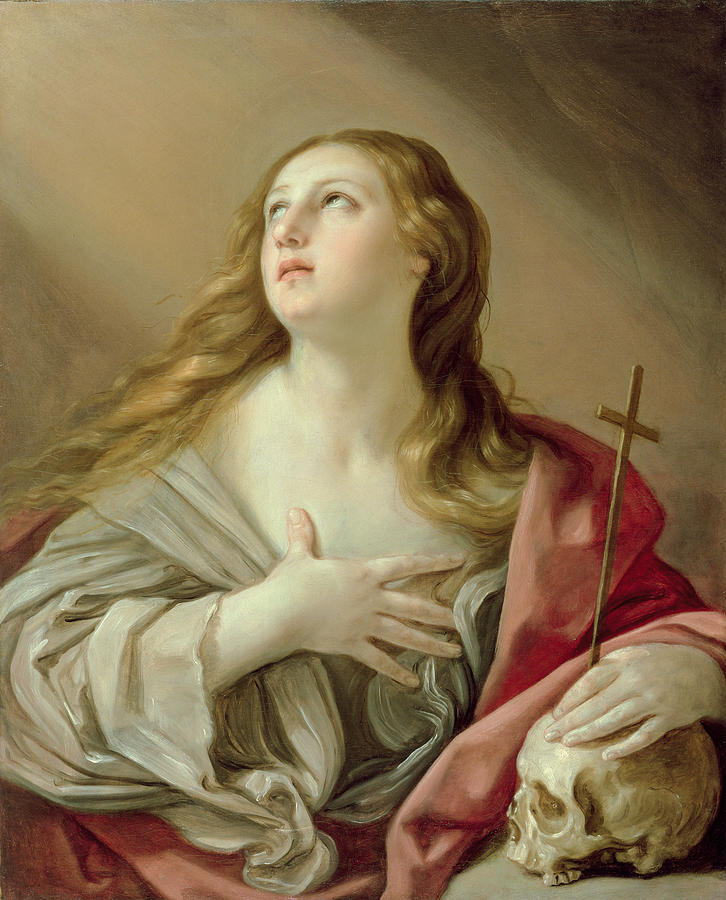
The penitant Magdalen
You can arrange your own Masses for the intentions of the Sodality, but the LMS is offering the service, which will be convenient for some people, of passing on Mass Offerings to priests for such Masses. We are also going to have at least one Mass a year said publicly, with more solemnity, for this intention, which we will advertise, towards which you can make a donation.


The Sodality prayer (Collect of the 'commemoration' pro devotis amicis):
Deus, qui caritátis dona per grátiam Sancti Spíritus tuórum fidélium córdibus infudísti : da fámulis et famulábus tuis, pro quibus tuam deprecámur cleméntiam, salútem mentis et córporis ; ut te tota virtúte díligent, et quæ tibi plácita sunt, tota dilectióne perfíciant. Per Dóminum nostrum Iesum Christum Fílium tuum, qui tecum vivit et regnat in unitáte eiúsdem Spíritus Sancti, Deus, per ómnia sæcula sæculórum. Amen.

O God, who, by the grace of the Holy Ghost, hast poured the gifts of charity in the hearts of thy faithful, grant to thy servants and handmaids, for whom we entreat thy mercy, health of mind and body; that they may love thee with all their strength and, by perfect love, may do what is pleasing to thee. Through our Lord Jesus Christ thy Son, who liveth and reigneth in the unity of the same Holy Ghost, God, world without end. Amen.

Masses said for the intentions of the Sodality should when possible make a 'commemoration' as per the above Collect, and its accompanying Secret and Postcommunion. These are found among the 'various prayers' in the Roman Missal; they were included in the first printed Missal, that of 1474. They are said in addition to the Collect, Secret, and Postcommunion of the day. This liturgical commemoration can be done at any Low Mass on a day of the 4th Class (ie, not on important feast days). The LMS Ordo has more details on these rules.